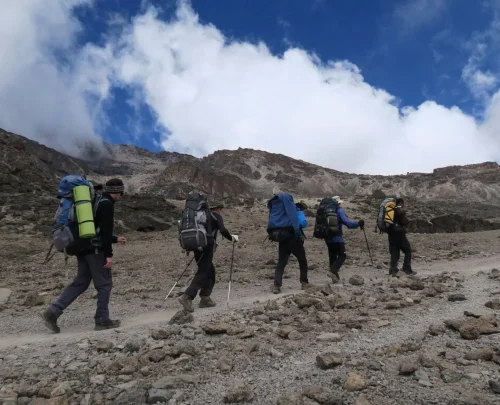
Mount Kilimanjaro is a challenging trek, but you do not need technical climbing experience to reach the summit. The main challenges are high altitude, long walking days, changing weather, and the final summit climb.
With proper training, a suitable route, and good acclimatization, many first-time trekkers successfully reach Uhuru Peak.
Is Kilimanjaro Difficult for Beginners?
Yes, Kilimanjaro can be challenging for beginners, but it is achievable with preparation.
You do not need to be an experienced mountaineer. However, regular walking and fitness training before the trek can help you handle the long days on the mountain.
The Biggest Challenge: Altitude
Altitude is usually the biggest challenge on Kilimanjaro.
As you climb higher, the air contains less available oxygen. Therefore, your body needs time to adjust.
Walking slowly, staying hydrated, getting enough rest, and choosing a longer route can help with acclimatization.
How Hard Is Summit Day?
Summit day is usually the most difficult part of the trek.
You may begin walking during the night and continue for several hours toward Uhuru Peak. The cold, darkness, steep terrain, and high altitude can make this section physically demanding.
After reaching the summit, you descend to a lower elevation for rest.
Which Kilimanjaro Route Is Easiest?
The Marangu Route is often considered one of the more straightforward routes because of its gradual trail and hut accommodation.
However, its shorter itineraries can provide less time for acclimatization.
The Machame and Lemosho Routes are longer and more demanding in some sections, but they can provide better acclimatization when completed over enough days.
Which Route Is Best for Acclimatization?
Longer routes generally provide more time for your body to adjust to altitude.
The Northern Circuit offers the longest itinerary, while Lemosho is also a popular choice for gradual acclimatization.
For many beginners, choosing more days can be more important than choosing the easiest trail.
How Fit Do You Need to Be?
You should be comfortable walking for several hours and handling uphill and downhill terrain.
Before your trek, focus on:
Long-distance walking
Hiking
Cardio exercises
Leg-strength exercises
Stair climbing
Weekend hikes
Start training several weeks before your climb and gradually increase your walking distance.
Does Kilimanjaro Require Technical Climbing?
No. The standard trekking routes do not require technical mountaineering skills.
You will walk rather than use technical climbing equipment. Nevertheless, the high altitude makes the trek physically and mentally demanding.
How Long Does It Take to Climb Kilimanjaro?
Most treks take around 5 to 9 days, depending on the route.
Longer itineraries are generally preferable because they allow more time for acclimatization. Although they may cost more, the additional days can make the experience more comfortable.
How to Make Kilimanjaro Easier
You can make your trek more manageable by:
Training before the climb
Choosing a longer route
Walking slowly
Resting when needed
Staying hydrated
Wearing suitable clothing
Following your guide’s instructions
Preparing properly for cold weather
Most importantly, avoid rushing. Kilimanjaro is about maintaining a steady pace and allowing your body to adjust.
Can an Average Person Climb Kilimanjaro?
Yes. Many people without previous mountain-climbing experience successfully reach Uhuru Peak.
However, individual fitness, health, altitude response, preparation, and route choice all affect the experience. If you have concerns about whether you are physically ready for high-altitude trekking, speak with a qualified medical professional before your trip.
Plan Your Kilimanjaro Trek with Gleam Horizon Safari
Gleam Horizon Safari can help you choose a suitable route and number of trekking days based on your experience, fitness, travel dates, and budget.
Book Your Kilimanjaro Trek
Ready to take on Africa’s highest mountain?
Book your Kilimanjaro trek with Gleam Horizon Safari and prepare for an unforgettable journey to Uhuru Peak with a local mountain team.